
El corazón de astronauta
Beatrice Bergamín, 2017
sobre / about

Datos técnicos. / Technical details.
Duración
>60'
Duration
>60'
Personajes
4
Characters
4
Actrices
2
Actresses
2
Actores
1
Actors
1
Público
Adulto
Audience
Adult
Formato
Grande
Format
Large
Sinopsis. / Synopsis.
El corazón de astronauta es la historia de amor de una mujer que necesita ser amada y, como no lo consigue, crea un perfil falso en las redes sociales de un hombre virtual, del que se enamora otra mujer real que necesita amar, sin saber que esa no es más que la foto de un hombre real, que no es capaz de amar. Trata sobre la ingravidez y fragilidad de los vínculos en la sociedad contemporánea.Trata sobre volver al inicio, a la vocación, al centro. Trata sobre tener un plan para salvarse. Trata sobre el cuerpo sin cuerpo, el sexo sin sexo y otros derivados del amor. Trata sobre el don que cada uno de nosotros tiene. Trata sobre las cosas que no existen y necesito que existan. Trata sobre las palabras que crean causas, cosas y casas. Trata sobre la alegría de vivir. Se trata de hacer y hacerse preguntas. Y de esa capacidad o incapacidad o RESISTENCIA del corazón, para cambiar de forma y de tamaño, dependiendo del esfuerzo al que esté siendo, o no, sometido. Se trata de no borrarse.
El corazón de astronauta is a love story about a woman who needs to be loved and, unable to find that love, creates a fake social media profile for a fictional man. Another real woman, who needs to love, falls for him, unaware that the profile is based on the photograph of a real man who is incapable of loving. It is about the weightlessness and fragility of relationships in contemporary society. It is about returning to the beginning, to one’s vocation, to one’s centre. It is about having a plan to save yourself. It is about the bodiless body, sex without sex, and the many derivatives of love. It is about the gift each of us possesses. It is about the things that do not exist but that I need to exist. It is about words that create causes, things and homes. It is about the joy of living. It is about asking questions, and asking ourselves questions. And it is about the heart’s ability—or inability, or RESISTANCE—to change shape and size depending on the effort it is, or is not, subjected to. Above all, it is about not erasing yourself.
Notas. / Notes on the piece.
Escribir "El corazón de astronauta" ha sido un salto al vacío, al espacio y al corazón. El dramaturgo Carles Alberola, nuestro tutor en el V Laboratorio de Escritura Teatral de Fundación Sgae, en el que ha sido desarrollado el texto, me envió un último mensaje al recibir la versión final: tu texto sirve para acariciar el alma. Si eso fuera cierto, para mi, todo el trabajo y más habría valido la pena. Está escrita desde la necesidad de amar y ser amado en esta sociedad contemporánea en la que el amor líquido parece estar anegando todo, o casi. En la que las redes sociales son un esqueleto vivo. En la que la vida real y la ilusoria son países o cuerpos o estados ilimitados, por los que navegamos sin encontrarnos. Es un texto escrito por y para calentar el cuerpo, ante la soledad que nos habita. Ojalá.
Writing El corazón de astronauta was a leap into the void, into space and into the heart. Playwright Carles Alberola, our tutor at the 5th Fundación SGAE Theatre Writing Laboratory, where the text was developed, sent me a final message after receiving the completed version: “Your text has the power to caress the soul.” If that were true, for me, all the work—and more—would have been worth it. It was written out of the need to love and be loved in contemporary society, where liquid love seems to be flooding everything, or almost everything; where social media are a living skeleton; where real life and imagined life are countries, bodies or boundless states through which we sail without ever finding one another. It is a text written by and for the warming of the body, in the face of the loneliness that inhabits us. I hope so.
Otros datos. / Other information.
Premio Mujeres que cumplen, 2018
V Laboratorio de Escritura Teatral, Fundación SGAE
Publicación: Editorial Fundación SGAE, Colección Teatro Autor
sobre / about


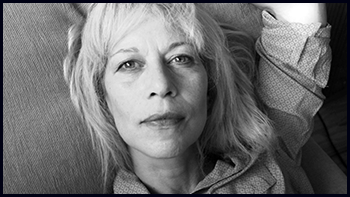

Biografía. / Biography.
Beatrice Bergamín es dramaturga, actriz, productora de teatro y periodista cultural. Compagina la interpretación con la escritura y trabaja como actingcoach en audiovisual. Destacan sus obras No hay papel (2014), Premio Eurodrams Awards 2018 (Ediciones Invasoras); El presente es un animal, Ayuda a la Creación de Comunidad de Madrid 2016 y Premio Internacional Dramaturgias Invasoras 2018; El corazón de astronauta (V Laboratorio de Escritura Teatral, ed. Fundación SGAE) y Premio “Mujeres que cumplen” 2018 de la Fundación SGAE; La mujer que amaba demasiado, seleccionada en el Salón Internacional del Libro Teatral 2019 (Esperpento Ediciones Teatrales); Four Seasons, dramaturgia para espectáculo de danza contemporánea de la compañía CaraBdanza; Nuestras Stories, dramaturgia para adolescentes (Ñaque Ediciones, 2021); El futuro será un jardín (o la selva), subvención Escritura Dramática Ministerio de Cultura 2022, y las piezas breves La socorrista (2021), La propina (2023), Alegría (2024) y Gaza (2024), publicadas por Ediciones Invasoras. Forma parte del Consejo de Redacción de la revista Primer Acto. “Una suicida emocional que vacía su historia, su pasado, su presente y futuro (…)", David García (crítico). "Los textos de B. Bergamín son carne de escenario: para ser respirados, callados, dichos, para herir al otro, para dar la paz. Para pasar de la pura belleza y la emoción a la broma y la distancia que deja en el aire una carcajada (...)", José Ramón Fernández (dramaturgo).
Beatrice Bergamín is a playwright, actress, theatre producer and cultural journalist. She combines acting with writing and works as an acting coach in the audiovisual sector. Her notable works include No hay papel (2014), winner of the 2018 Eurodram Awards (Ediciones Invasoras); El presente es un animal, recipient of the 2016 Community of Madrid Creation Grant and winner of the 2018 Premio Internacional Dramaturgias Invasoras; El corazón de astronauta (5th Fundación SGAE Theatre Writing Laboratory), winner of the 2018 “Mujeres que cumplen” Award from Fundación SGAE; La mujer que amaba demasiado, selected for the 2019 Salón Internacional del Libro Teatral (Esperpento Ediciones Teatrales); Four Seasons, dramaturgy for a contemporary dance production by CaraBdanza; Nuestras Stories, a play for teenagers (Ñaque Ediciones, 2021); El futuro será un jardín (o la selva), recipient of the 2022 Ministry of Culture Dramatic Writing Grant; and the short plays La socorrista (2021), La propina (2023), Alegría (2024) and Gaza (2024), published by Ediciones Invasoras. She is a member of the editorial board of the theatre magazine Primer Acto. “An emotional suicide who empties out her story, her past, present and future (…)” — David García (critic). “B. Bergamín’s texts are made for the stage: to be breathed, silenced, spoken, to hurt the other, to bring peace. To move from pure beauty and emotion to humour and the distance that a burst of laughter leaves hanging in the air (…)” — José Ramón Fernández (playwright).
Escritura. / Style.
«Soy consciente de que la gente se muere de hambre, de cáncer, de frío, de asco, de muerte natural, o de amor. Yo si no escribo me muero y escribo para no morirme. Mi técnica para escribir es leer poesía. Y madrugar, escuchar la radio, ver telediarios, espiar a mis vecinos, ir en metro y no contestar al teléfono ni enviar WhatsApp. Y ser valiente o al menos intentarlo. Y en cada texto perseguir un viaje hacia el instinto, hacia el hueco, hacia la lengua, hacia el pez en el limo, que tanto necesito. Un viaje personal por el aire y bajo tierra, hacia mí, hacia ustedes, hacia dentro y en este presente tan bestia en el que vivimos, escribimos y nos morimos. ¿Necesito hablar de mí? Sin duda. Para bien, para mal o para todo lo contrario, es a mí misma a quien mejor conozco de todos aquellos a los que no conozco. Como diría Unamuno, “Toda obra de ficción, todo poema, cuando es vivo es autobiográfico”. AMOR. Es el tema. Lo objetivo y subjetivo, lo social, lo político, lo extraño, lo impúdico, lo perverso, lo íntimo, lo platónico, lo tristísimo, lo deshonesto, lo bellísimo, lo animal y lo arbóreo del amor, es casi siempre el temita o temazo sobre el que escribo. Pobre de mí. Y de vosotros.» (Beatrice Bergamín).
«I’m aware of the fact that people die from hunger, cancer, cold, nausea, natural deaths or love. Writing is what keeps me alive, so I write to avoid death. My writing is fuelled by reading poetry. And getting up early, listening to the radio, watching the news, spying on my neighbours, travelling on the metro and not answering phone calls or sending WhatsApp messages. And being brave, or at least trying to be. In each text I aim to pursue a journey towards the instinctive, towards that thing that I am missing, towards language, towards the fish in the limo, which I need so much. A personal journey through the air and underground, towards myself, towards you, towards within and in this beastly time in which we all live, write and die. Do I need to talk about myself? Absolutely. Whether for good, bad or any other reason, I know myself much better than those who I don’t know. As Unamuno would say, “All works of fiction and poetry, when alive, is autobiographical”. LOVE. That is the topic. The aspects of love which are objective, subjective, social, political, strange, shameless, perverse, intimate, platonic, sad, dishonest, beautiful, animal and arboreal are almost always the theme, whether subtle or dominant, about which I write. Poor me. And poor you.» (Beatrice Bergamín).
Obras. / Plays.
-
2025. 56 VERDES DIFERENTES
-
(Lectura dramatizada) Sala Berlanga, Madrid, dirección de Carlos Tuñón
XII Laboratorio de Escritura Teatral, Fundación SGAE
Fundación SGAE, colección teatroautor, 2025
-
2020. NUESTRAS STORIES O NI TAN MAL
-
Editorial Ñaque, colección Adolescer
-
2019. LA SOCORRISTA
-
Ediciones Invasoras, libro colectivo «La patria de los parias»
-
2017. LA MUJER QUE AMABA DEMASIADO
-
Monólogo incluido en el libro "22 Monólogos de cuento", Esperpento Ediciones Teatrales
-
2017. EL CORAZÓN DE ASTRONAUTA
-
Premio Mujeres que cumplen, 2018
V Laboratorio de Escritura Teatral, Fundación SGAE
Editorial Fundación SGAE, Colección Teatro Autor
-
2016. EL PRESENTE ES UN ANIMAL
-
Auditorio Sanchinarro, Madrid, 2020
(Lectura dramatizada) Ciclo "Las funciones por hacer", El Pavón Teatro Kamikaze, Madrid, 2018-2019
Primer Premio Internacional de Dramaturgia Invasora, 2017
Ayuda a Personas Físicas (modalidad: Autor Dramático) para la creación y desarrollo de las Artes Escénicas, Comunidad Autónoma de Madrid (CAM)
Ediciones Invasoras, 2018
-
2014. NO HAY PAPEL
-
Sala OFF de La Latina, Madrid + Sala Tú, Madrid. Festival Ellas Crean + Festival Mujeres que cambian el mundo + Muestra de Teatro Español de Autores Contemporáneos + En gira 2017/2018
Award Eurodrams 2018, Liga Traductores Europeos
Ediciones Invasoras, 2018
Programa Platea 2019/2020 + Red de Teatros
-
Leyenda / Legend
-
Estreno / Premio / Beca / Publicación
Premiere / Award / Grant / Publication
XII Laboratorio de Escritura Teatral, Fundación SGAE
Fundación SGAE, colección teatroautor, 2025
V Laboratorio de Escritura Teatral, Fundación SGAE
Editorial Fundación SGAE, Colección Teatro Autor
(Lectura dramatizada) Ciclo "Las funciones por hacer", El Pavón Teatro Kamikaze, Madrid, 2018-2019
Primer Premio Internacional de Dramaturgia Invasora, 2017
Ayuda a Personas Físicas (modalidad: Autor Dramático) para la creación y desarrollo de las Artes Escénicas, Comunidad Autónoma de Madrid (CAM)
Ediciones Invasoras, 2018
Award Eurodrams 2018, Liga Traductores Europeos
Ediciones Invasoras, 2018
Programa Platea 2019/2020 + Red de Teatros
Premiere / Award / Grant / Publication
sus obras en / their works on

-
 2025 >60' 1 0
56 VERDES DIFERENTES
Beatrice Bergamín -
 2020 >60' 6-10 6-10
NUESTRAS STORIES O NI TAN MAL
Beatrice Bergamín -
 2019 <30' 3 0
LA SOCORRISTA
Beatrice Bergamín -
2014 30'-60' 2 0
NO HAY PAPEL
Beatrice Bergamín -
 2016 30'-60' 2 1
EL PRESENTE ES UN ANIMAL
Beatrice Bergamín -
 2017 >60' 2 1
EL CORAZÓN DE ASTRONAUTA
Beatrice Bergamín -
 2017 <30' 1 0
LA MUJER QUE AMABA DEMASIADO
Beatrice Bergamín

